
Scroll through Instagram, TikTok, or YouTube, and you’ll find endless skincare advice.
From trending facial treatments and exfoliation techniques to the latest ingredients promising glowing skin, there’s no shortage of people sharing their skincare routines, favorite products, and beauty secrets.
And while social media can be a great place to discover new products and trends, there’s a big difference between loving skincare and understanding how to perform professional skincare treatments safely.
After all, watching someone perform a facial isn’t the same as knowing why they’re using certain products, how those ingredients interact with the skin, or whether that treatment is appropriate for the person receiving it.
That’s where professional esthetics education comes in.
At The Salon Professional Academy San Antonio (TSPA SA), we believe that becoming a knowledgeable skincare professional starts with understanding the science behind the services—not simply learning the steps.
Because when someone trusts you with their skin, knowing what you’re doing matters just as much as knowing how to do it.
Before an esthetics student can confidently perform professional treatments, they need to understand the skin itself.
And there’s a lot more to learn than most people realize.
The skin is the body’s largest organ, serving as a protective barrier while performing several important functions.
Professional esthetics education introduces students to skin anatomy, physiology, skin types, common conditions, and the factors that can influence how skin responds to different products and treatments.
For example, two clients might both complain about dry skin.
But does that mean they need the same treatment?
Not necessarily.
One may naturally produce less oil, while another may be experiencing temporary dehydration. Their skin concerns might sound similar, but their needs can be different.
Understanding these distinctions helps future estheticians make more informed decisions rather than recommending the same products or services to everyone.
Professional skincare isn’t about following a formula that works for every person. It’s about learning how to evaluate individual needs.
Imagine a guest arriving for a facial and saying, “I just want something that makes my skin glow.”
Sounds simple enough, right?
But before beginning, a trained esthetician needs to ask questions.
What products is the client currently using?
Do they have sensitivities or allergies?
Have they recently received another skincare treatment?
Are they using medications or ingredients that may affect how their skin responds?
Do they have concerns that should be evaluated by a medical professional?
These questions aren’t just part of making conversation.
They’re an important part of providing professional skincare services.
Through education and hands-on practice, esthetics students learn how to conduct consultations, analyze skin within their professional scope, recognize potential contraindications, and make appropriate service recommendations.
They also learn something equally important:
Sometimes the most professional decision is knowing when not to perform a treatment.
Recognizing when a service should be modified, postponed, or referred to an appropriate healthcare professional is an essential part of responsible skincare practice.
Here’s something that might surprise someone who is new to esthetics school.
Professional skincare involves quite a bit of science.
It’s not enough to know that a product is popular or that an influencer recommends it.
Estheticians need to understand what ingredients are designed to do, how products are formulated, and how different skin types and conditions may respond.
For example, exfoliating products can vary considerably in their ingredients, strengths, and intended uses.
A product that works well for one client may be inappropriate for another.
Professional training helps students understand the purpose of different skincare ingredients, how to follow manufacturer instructions, and why product selection matters.
At TSPA San Antonio, students gain exposure to professional skincare education and products, including Dermalogica, while developing their understanding of professional treatments and home-care recommendations.
The goal isn’t simply to memorize product names.
It’s to understand why a product may be appropriate, how it should be used, and when another approach may be better.
That knowledge can make a tremendous difference in the way future estheticians approach client care.
Let’s talk about something that doesn’t always make exciting social media content.
Sanitation.
Disinfection.
Infection control.
These may not be the glamorous parts of esthetics education, but they’re among the most important.
When working with clients, estheticians have a professional responsibility to maintain a clean and safe environment.
That includes understanding proper sanitation and disinfection procedures, preventing cross-contamination, using products and equipment correctly, and following applicable state regulations.
Students also learn why certain conditions, sensitivities, or contraindications may make a service inappropriate.
At TSPA San Antonio, safety practices are an essential part of preparing students to enter the professional beauty industry.
Because a beautiful treatment room and an impressive skincare routine mean very little if the person performing the service doesn’t understand proper safety procedures.
Professionalism begins with protecting the people who trust you.
It has introduced new audiences to ingredients, treatments, and career possibilities they might never have considered.
But there’s an important distinction between skincare content created for entertainment or personal use and the education required to work professionally with clients.
A short video may demonstrate a technique.
It usually doesn’t explain every possible contraindication, sanitation requirement, product consideration, or decision involved in determining whether that service is appropriate.
And it certainly can’t replace the experience of practicing under the supervision of a knowledgeable educator.
Professional esthetics training gives students the opportunity to ask questions, understand mistakes, receive feedback, and develop skills in a structured learning environment.
Instead of simply copying what they see, students begin learning to understand the reasoning behind professional techniques.
And that makes a difference.
Learning skincare theory is important.
But eventually, students need to put that knowledge into practice.
That’s one of the most valuable parts of attending esthetics school.
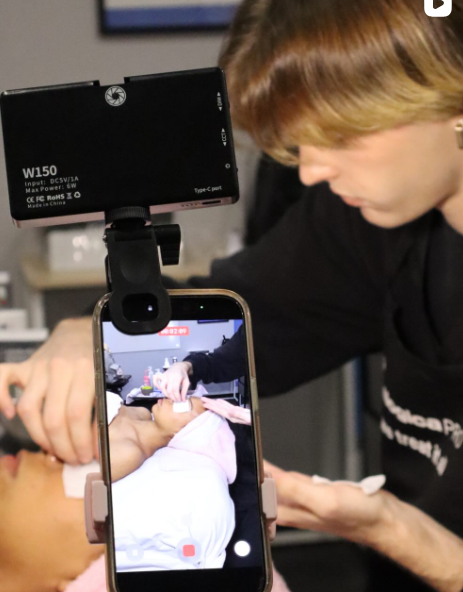
At The Salon Professional Academy San Antonio, students have opportunities to develop their practical skills through hands-on training and supervised guest services.
They practice conducting consultations, preparing their treatment areas, selecting appropriate products, performing services within their training, and communicating with guests.
And sometimes, things don’t go exactly as expected.
A guest may have questions the student hasn’t encountered before.
A treatment may need to be adjusted.
An educator may recommend a different approach.
Those experiences are part of learning.
With supervision and guidance, students have opportunities to develop their judgment and confidence while continuing to improve their technical skills.
Confidence doesn’t come from performing a technique once. It develops through education, practice, feedback, and experience.
Think about the last time you visited a salon, spa, or skincare professional.
What made the experience memorable?
Was it the service itself?
Or was it also how the professional treated you?
Did they listen to your concerns?
Explain what they were doing?
Make you feel comfortable asking questions?
Help you understand what to expect?
Professional estheticians do more than provide skincare services.
They develop relationships with their clients.
A thorough consultation, clear communication, realistic expectations, and appropriate home-care recommendations can all contribute to a positive guest experience.
At TSPA San Antonio, we want students to recognize that communication and professionalism are essential parts of their education.
Technical knowledge is important.
But the ability to listen, educate, and build trust can be just as valuable throughout a skincare career.
Another exciting part of esthetics education is discovering how many directions a skincare career may take.
Some graduates pursue opportunities in day spas or salons.
Others develop interests in waxing, brows, skincare retail, product education, or specialized services.
With experience, additional training, and the appropriate credentials, some professionals explore management, entrepreneurship, or other areas of the beauty industry.
Medical spa environments may also interest graduates, although it’s important to understand that an esthetics license does not authorize every procedure offered in those settings. Additional credentials or medical authorization may be required depending on the service and applicable regulations.
The beauty industry offers a variety of possibilities, but every career begins with developing the appropriate education and skills.
And sometimes, students discover their favorite part of esthetics is something they hadn’t even considered before enrolling.
That’s part of what makes the journey exciting.
Here’s something every future esthetician should understand:
The skincare industry is constantly evolving.
New ingredients are introduced.
Products change.
Research advances.
New techniques and technologies emerge.
And trends come and go.
Professional education provides a foundation, but successful skincare professionals also recognize the importance of continuing to learn throughout their careers.
That might mean attending advanced classes, earning additional certifications, learning about new product lines, or developing expertise in a particular area of esthetics.
A strong foundation helps professionals evaluate new information rather than simply following the latest trend.
The goal isn’t to know everything on graduation day. It’s to develop the knowledge and skills that allow you to keep learning.
If you’ve ever found yourself researching skincare ingredients, watching facial demonstrations, helping friends understand their skincare routines, or wondering what it would be like to work in a spa, perhaps it’s time to explore esthetics as a career.
You don’t have to know everything about skincare before enrolling.
That’s what education is for.
At The Salon Professional Academy San Antonio, our esthetics program combines classroom instruction, hands-on learning, professional product education, and guidance from licensed educators to help students develop the skills needed to pursue a career in skincare.
You’ll learn that esthetics is about more than performing facials.
It’s about understanding skin.
Making informed decisions.
Practicing safely.
Communicating with clients.
Developing professional confidence.
And continuing to grow.
Because great skincare professionals don’t simply follow trends. They understand the science, safety, and purpose behind what they do.
We’d love to show you what professional skincare education looks like at TSPA San Antonio.
Schedule an admissions tour, meet our educators, explore our esthetics program, and discover how you can begin turning your interest in skincare into a professional career.